
On September 26, 2025, the HKIB Annual Banking Conference 2025 was successfully held at the Hong Kong Convention and Exhibition Centre. As the most influential annual gathering for Hong Kong’s banking industry, this year’s conference was themed “The Future of Banking: Agile Adaptation, Intelligent Upgrading, Resilient Growth,” bringing together professionals, industry leaders, and policymakers from Hong Kong and Mainland China for in-depth dialogue on how financial institutions can leverage next-generation technologies to formulate sustainable, long-term winning strategies. Mr. Michael Wong, Deputy Financial Secretary of the Hong Kong SAR Government, and Mr. Arthur Yuen, Deputy Chief Executive of the Hong Kong Monetary Authority and Chairman of the Council of the Hong Kong Institute of Bankers, attended the conference and delivered keynote addresses.
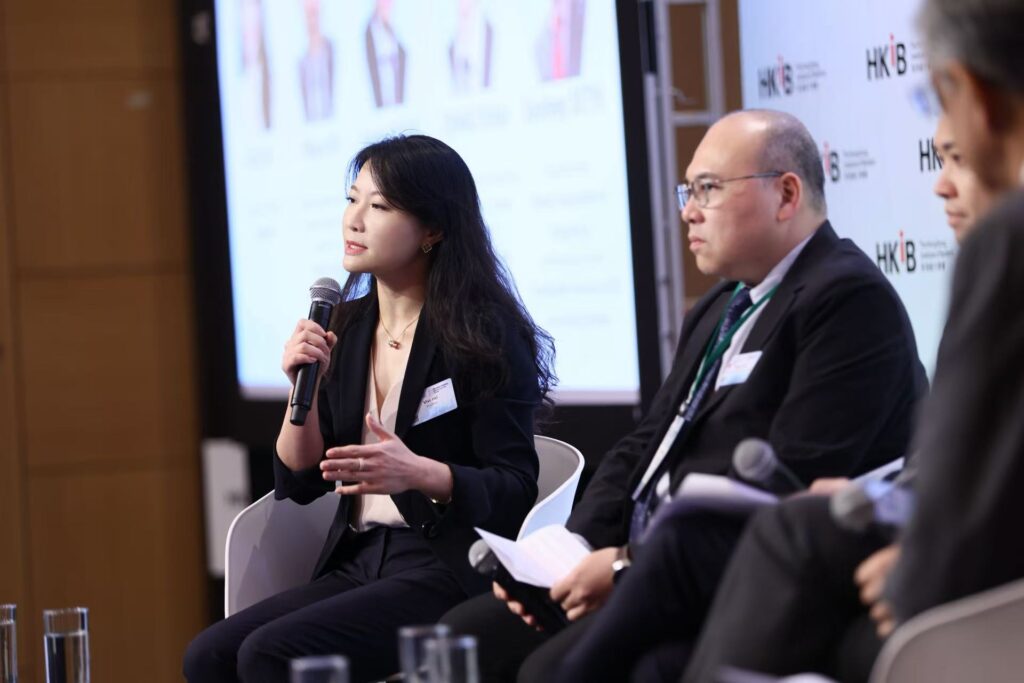
YoujiVest Co-founder and CEO Vivi Hu was invited to join a breakout panel discussion at the conference titled “Green Finance and Future Skills: Empowering the Next-Generation ESG Operating Model through Technology, Data, and Governance.” Fellow panelists included Wilson Ng, Deputy General Manager of the Information Technology Department at Bank of China (Hong Kong); Ronald Young, Head of Sustainable Finance at the Hong Kong Monetary Authority; and Yinfan Zhang, Head of North Asia, Global Affairs and Strategic Development at Ant International. The discussion was moderated by Sandeep Sethi, Board Member of the Hong Kong Fintech Association.
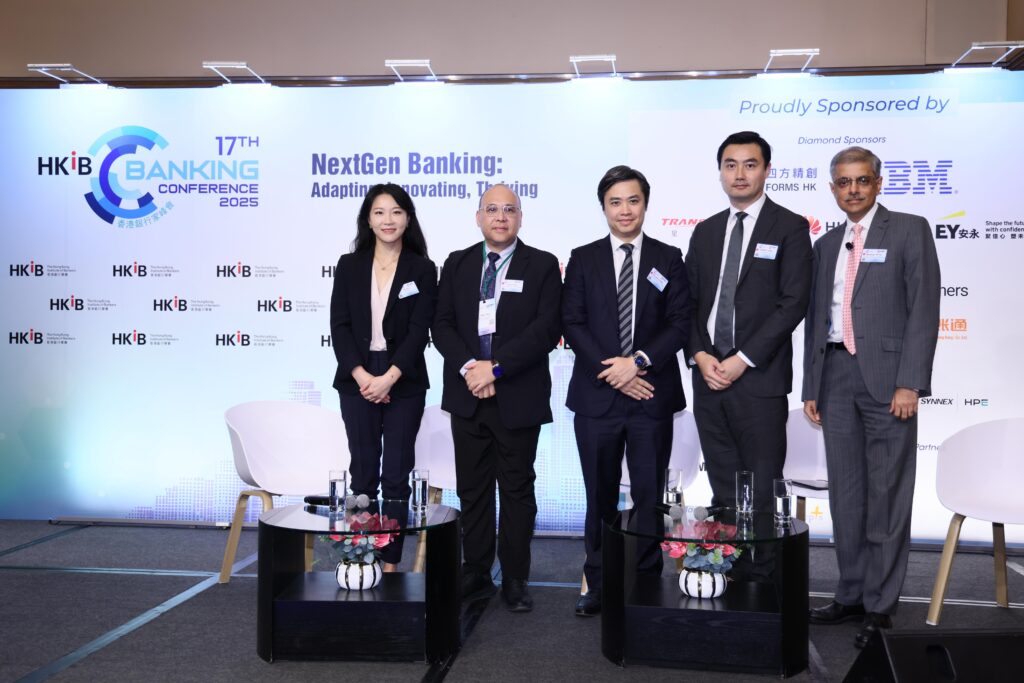
The panelists conducted a comprehensive discussion of the ESG development path for next-generation banking from multiple angles, including policy drivers, banking digitalization in practice, intelligent risk management, data governance, and implementation challenges. During the session, Ms.Vivi Hu shared in detail YoujiVest’s bank climate risk stress testing toolkit, along with the company’s latest solutions tailored for the banking sector, including high-precision, address-level climate risk identification for global assets and ESG profiling for SMEs.
The panelists reached a shared view that ESG has evolved from a peripheral concern to a core competitive differentiator and is actively reshaping risk management frameworks and business growth models across the banking industry. On this point, Ms. Hu emphasized that technology must transform ESG from a back-end reporting tool into a front-end decision-making core. By leveraging localized, asset-level “decision-grade data,” financial institutions can quantify climate risk, translate ESG signals into actual financial risk impact, and achieve forward-looking risk management powered by AI and automation, while preserving the auditability and explainability of the underlying technology.
When discussing the many challenges facing ESG development, Ms.Hu drew on her perspective as a fintech company leader to address data credibility in particular and proposed a technical pathway for building trusted data pipelines. She argued for moving away from inefficient static questionnaires, and instead leveraging technologies such as IoT sensors, satellite remote sensing, and document AI to capture objective, broader-based data signals in real time. Through multi-source triangulation, every data point can be tagged with provenance and confidence metadata, and tamper-proof verification can be applied to critical data points to ensure data quality. Building on this foundation, systems can automatically map data across different disclosure frameworks (such as ISSB and CSRD), generating reports aligned with the requirements of various stakeholders at the click of a button, and fundamentally resolving the current problems of duplicative reporting and inconsistent reporting standards.
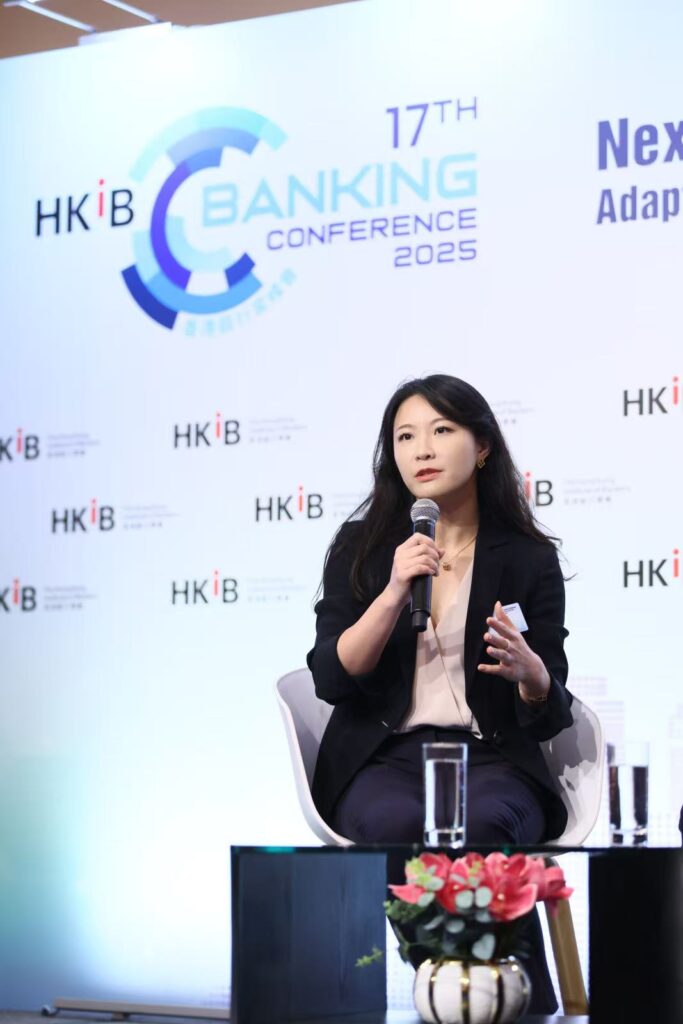
Looking ahead at the action roadmap for ESG development in the banking industry, Ms. Hu shared her view that ESG factors should be embedded throughout the full decision-making lifecycle, from client onboarding to risk pricing, post-investment monitoring, and portfolio rebalancing. Drawing on the localized, asset-level, high-precision data that the Asian market requires, banks can leverage AI and automation to enhance analytical efficiency, break down silos between internal and external reporting, and rapidly iterate and validate insights to drive efficient decision-making. The goal is to transform ESG from an annual disclosure “burden” into a daily source of value creation.
Building on 16 years of distinguished history, the HKIB Annual Banking Conference 2025 once again provided a critical platform for experts from Hong Kong and Mainland China to jointly explore the trends, strategies, and challenges shaping the future of banking, helping institutions strengthen their capacity to navigate change and better advance their transformation journeys. YoujiVest will continue to provide high-quality data support and cutting-edge analytical solutions for the banking industry’s ESG transformation.